Picking up my volume of Goethe's Faust at Goethe Institut Jerusalem, I have not at once noticed its date and place of publication - 1944 in Basel, Switzerland. The book lay on my bookshelf for a while before it crossed my mind to serialize it in a series of video clips on YouTube. The technical side of the process of setting up such a video series on-line only recently came together to make it possible to save the web cam recording directly into the cloud behind the video search engine. The first video in this series allows to see the real time how YouTube upload service evolved as a medium in its own right. Following McLuhan's, medium is the message here too.
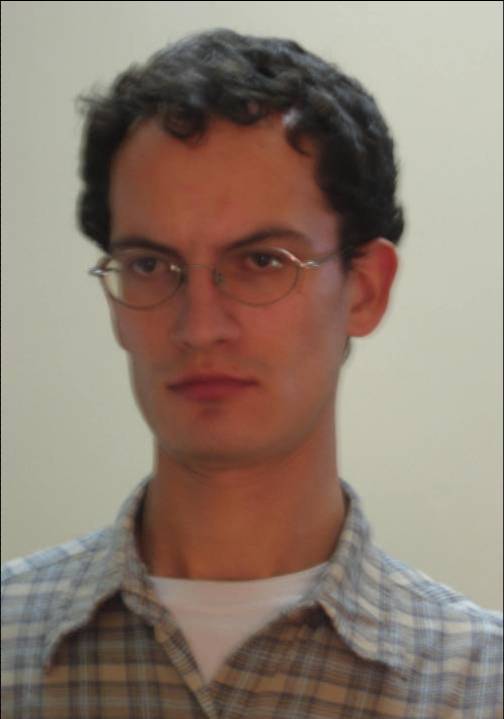
Johann Wolfgang Goethe predates the formulation of the premises on which academic understanding of modern art is built. For a postmodern reflection on contemporary art, a perspective deriving from another time, place and language might be of use, especially given the dissipation of the theoretical foundations of modern art and contemporary art as such. The inspiration for my reading of prologue to Goethe's Faust in original German supplied, however, an on-line project by the newspaper Die Frankfurter Allgemeine Zeitung to read Jonathan Littel's book Les Bienveillantes, reproduced as Die Wohlgesinnten in its German translation, as a series of video recordings of excerpts from it read in a deadpan, up-close, black and white fashion.
As such this video is part of a minimalist experimentation with a medium of digital video as it becomes embedded into web platforms that serve educational, entertainment, and research purposes. In real time, this video is inserted into a larger discussion of the legacy of Goethe's poetry, literature and writing. Any discussion of European Enlightenment would be incomplete without a German contribution to it, such as that of Goethe. Presently, however, as the digitization of books and their distribution in e-book format and as the transformation of conventional libraries into media spaces takes pace, books and libraries as previous generations knew them become ripe for museum treatment by archives, exhibitions and collections. Books may be on their way to become collectibles as serialized unique objects deriving their value from time and place of their limited edition printing.
In fact, my volume of Goethe was a giveaway as the storage rooms of the Goethe Institute had to make extra room for newly printed books or to be redesigned as a cafe inviting younger and less reading-bound audiences. Thus, on a Saturday in July, 2010, I continued my experiment of actualization of classical German literature through direct recording at the upload interface of YouTube website using a laptop web cam and a headset microphone on a neutral background. Using German should make the text read hardly intelligible to the majority of this video's viewers, unless a subtitle is provided, which exact citation information attached to the video and wide availability of translations makes possible. Nevertheless, the stress of this video work lies on rendering well-known and canonical unfamiliar and iconoclast.
As an artwork, this video, on one hand, cites a series of videos each recording a two-page excerpt from Goethe's work from the third volume of Goethes Werke. On the other hand, this video cites Goethe's Faust in presenting a small part from this much larger work. Despite the citation information supplied with the video, neither of the references is immediately apparent to its viewers, should they confront in on its own terms internationally. Language barrier and world literature educational curricula aside, this video records the tension between performance and reference within a new and evolving medium of on-line digital video. Even though one might argue that video and its aesthetics are not new, web video as a medium in its own right does represent a radical departure from what contemporary art critics confronted from the 1960s to the 1990s, when the Internet and the World Wide Web have arrived.
Video works of this, latter kind of on-line video both detach themselves from video-cassettes, CD-ROMs or DVDs as data carriers and explore the new territory of data cloud storage characterized by instant availability. Thus, a transition from reproducibility towards accessibility and embedding is made, as complex framework of terms, conditions and copyright mediates the relations between this video's author and its viewers. Within YouTube platform each video becomes unique. This video work highlights this theoretical fact as it straddles the theoretical division line between copy and original, as particular time, place and person became documented within the circumstances that will never repeat themselves and are irreducibly connected to the circumstances of their becoming tied into a video work that explore the spaces between history and everyday life, individuality and anonymity, and repetition and difference.
The reference to Gille Deleuze’s Différence et Répétition is not fortuitous. The principle of recurring video clips this video work cites and the principle of different pieces of original text being read do not overlap and are not reducible to each other. This video belongs to a series of other videos produced in accord with the minimalist principle of one after another, as one page after another is read to its end. The two series of web videos and text excerpts mutually constitute each other at the same time as they refer to particular person enacting, performing the reading and to a particular, individual edition of otherwise reproducible text. The abstractness and concreteness of the repetition and difference that this video indexes is what constitutes it as a work of art.
As part of an authored and non-repeatable series with every recording being live and different, and belonging to various regimes of technological and legal embedding, this video work becomes collectible through copy rights and unique URL associated with it.

Subscribe to:
Post Comments (Atom)
No comments:
Post a Comment